Written by The Botanical Glow
Why Rosehip Oil Is One of the Best Natural Beauty Secrets for Glowing Skin
Brand: Cliganic
This article contains affiliate links. As an Amazon Associate we earn from qualifying purchases — at no extra cost to you.
Shop on Amazon →Sometimes the simplest skincare products end up becoming the most lasting. While beauty trends cycle through almost every season, a small handful of natural ingredients have quietly held their ground for decades, and rosehip oil is one of the most reliable members of that group.
It does not need a marketing campaign to keep finding new fans. Single-ingredient, lightweight, genuinely multipurpose, and built on a fatty acid and antioxidant profile that most synthetic moisturisers spend serious money trying to replicate, it has earned its place in the bathroom cabinet through consistent, repeatable results.
What Is Rosehip Oil?
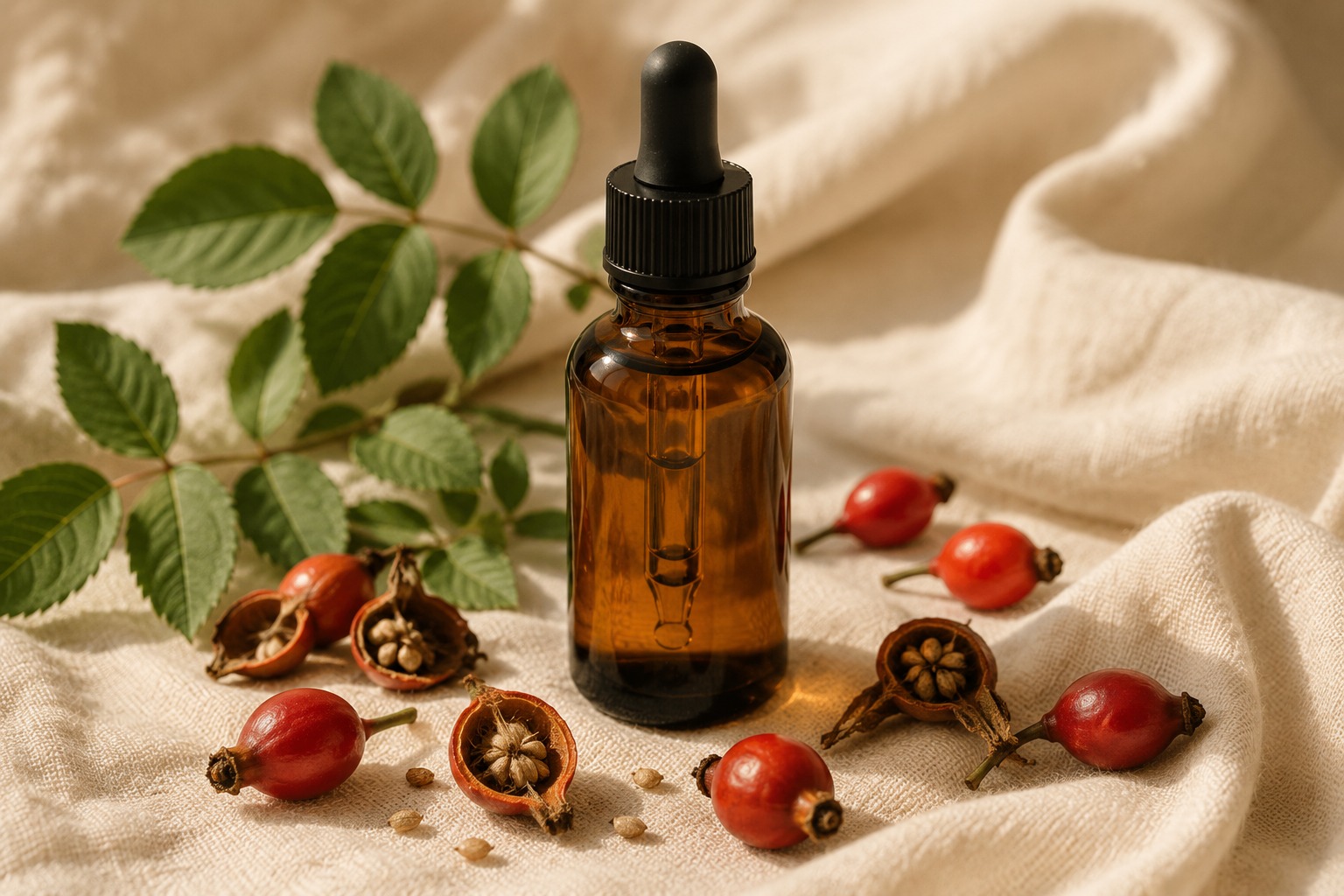
Rosehip oil is pressed from the seeds inside the bright red fruit of the wild rose bush, most commonly Rosa canina for cosmetic-grade oils, with some premium variants using Rosa rubiginosa from Chile. The seeds carry almost none of the floral fragrance you might expect from anything labelled "rose"; the oil has an earthy, faintly nutty scent instead, which tends to surprise first-time users but rarely troubles them for long. What it does contain, in remarkably high concentration, is a combination of essential fatty acids: principally linoleic acid at around 51%, oleic acid at roughly 20%, and linolenic acid at approximately 19%, alongside natural vitamin E, carotenoids that the skin converts into vitamin A precursors, and a range of antioxidant compounds. That fatty acid profile sits unusually close to the skin's own natural lipid composition, which is one of the reasons rosehip absorbs so readily and feels so light despite being genuinely nourishing on paper.

Benefits Of Rosehip Oil For Skin
Used consistently, rosehip oil hydrates dry and dehydrated skin, supports the integrity of the skin barrier, and softens the visible appearance of fine lines and uneven texture. The high linoleic acid content makes it particularly well suited to combination skin and even mildly oily types; counterintuitively, the right oil can help to balance oilier skin rather than aggravate it. The result, over weeks of regular use, is the kind of soft, lit-from-within luminosity that heavier oils tend to suppress rather than enhance.
It is a natural fit for evening use as well. Carotenoid-rich botanical oils complement the skin's natural overnight repair processes, and the lightweight texture absorbs without leaving any residue on the pillowcase. A consistent few drops before bed tends to deliver visible softness and brightness by morning. The improvement is cumulative rather than immediate, building quietly but noticeably over weeks.
How To Use It
The most common application is as a nighttime facial oil: two or three drops warmed between clean palms, then pressed gently into the face after cleansing or after a water-based serum has fully absorbed. It can also be blended directly into your usual moisturiser for an extra layer of nourishment, used as a slip layer for gua sha massage, smoothed through dry hair ends, or worked into cuticles and nails before bed. The versatility is genuine. A single bottle quietly does the work of several.
One practical note that matters particularly with this oil: rosehip is rich in polyunsaturated fatty acids, which means it oxidises faster than more stable carrier oils like jojoba or argan. Store the bottle somewhere cool and dark, use it within six months of opening, and trust your nose. A sharp, sour, or distinctly off smell means the oil has oxidised and should be replaced. Freshness matters more with rosehip than with most other facial oils; an oxidised oil simply will not perform the way the fresh version does.

Choosing A Good Rosehip Oil
The rosehip oil category has its share of diluted, refined, and over-processed products, so a few label details make a real difference. When shopping, look for:
- 100% pure, single ingredient: no carrier oils, added fragrances, or fillers diluting the formula.
- USDA Organic certified: confirms the rosehips were grown without synthetic pesticides and processed to organic standards.
- Cold-pressed and unrefined: preserves the fatty acid profile, carotenoids, and vitamin E that heat extraction and refining tend to strip out.
- Glass bottle, ideally amber or dark: rosehip oil is particularly sensitive to light degradation, so the packaging is not merely aesthetic.
Most rosehip oils on the market fail at least one of those criteria. The one that clears all four is the Cliganic Organic Rosehip Seed Oil. It delivers 100% pure single-ingredient Rosa canina seed oil, USDA Organic certified, cold-pressed and unrefined, in amber glass packaging that protects the formula. Beyond the core criteria, it is also Non-GMO Project Verified, vegan, and cruelty-free. Cliganic's consistency across their botanical oil range is part of the appeal; it is a brand that holds the same standard across products rather than reserving it for a flagship line. If you have come across their argan oil, the rosehip lives up to the same benchmark, at a price point that makes daily use entirely realistic.
Worth knowing before buying: the oil carries a distinctive earthy, nutty scent rather than the floral one the name might suggest. This is entirely normal for cold-pressed rosehip seed oil, but worth being prepared for if you are expecting something closer to rose.
Final Thoughts
The best botanical oils earn their place through consistency rather than novelty, and rosehip oil has had longer than most to prove itself. Single ingredient, lightweight, genuinely versatile, and built on a nutrient profile that has held up to decades of scrutiny. It is the kind of product that stops being a decision and quietly becomes a habit.
A few drops before bed, night after night, does more than most complicated routines ever manage.