Written by The Botanical Glow
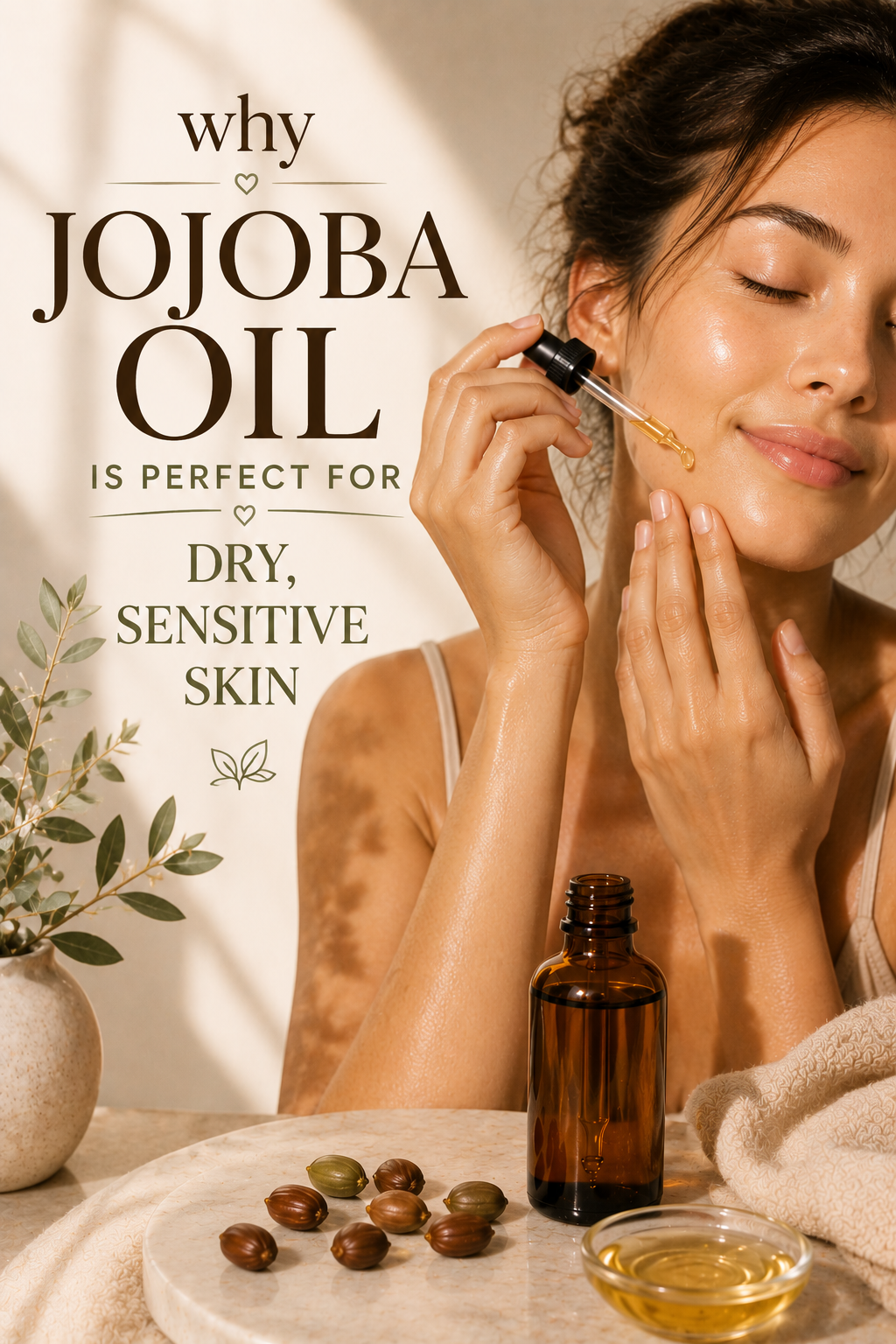
Why Jojoba Oil Is Perfect For Dry, Sensitive Skin
Brand: Cliganic
This article contains affiliate links. As an Amazon Associate we earn from qualifying purchases — at no extra cost to you.
Shop on Amazon →Some skincare ingredients earn their place through novelty. Jojoba oil earned its place through chemistry.
It has been a clean-beauty staple for decades, and the reason it has never really gone away is straightforward: the science behind it is genuinely interesting, and the results for dry and sensitive skin are consistently good. Not flashy, not dramatic, just the kind of reliable, daily softening that makes it one of those products you stop reconsidering and simply keep buying.
What Jojoba Oil Actually Is
Jojoba oil is, strictly speaking, not an oil at all. It is a liquid wax ester, pressed from the seeds of the Simmondsia chinensis shrub native to the Sonoran Desert of North America. Most plant-derived oils are triglycerides, which sit on the skin's surface before slowly absorbing. Jojoba's wax ester structure is chemically closer to the sebum the skin produces naturally, which is why it absorbs so readily and why it does not leave the heavy, greasy residue that richer triglyceride oils tend to.
That structural similarity to sebum also makes jojoba unusually stable. Unlike most botanical oils, which oxidize relatively quickly because of their polyunsaturated fatty acid content, jojoba's low triglyceride content makes it highly resistant to oxidation. A bottle kept in reasonable conditions will stay fresh considerably longer than rosehip, argan or most other carrier oils — a practical advantage as well as a formulation one.
Why Sensitive Skin Responds So Well To It
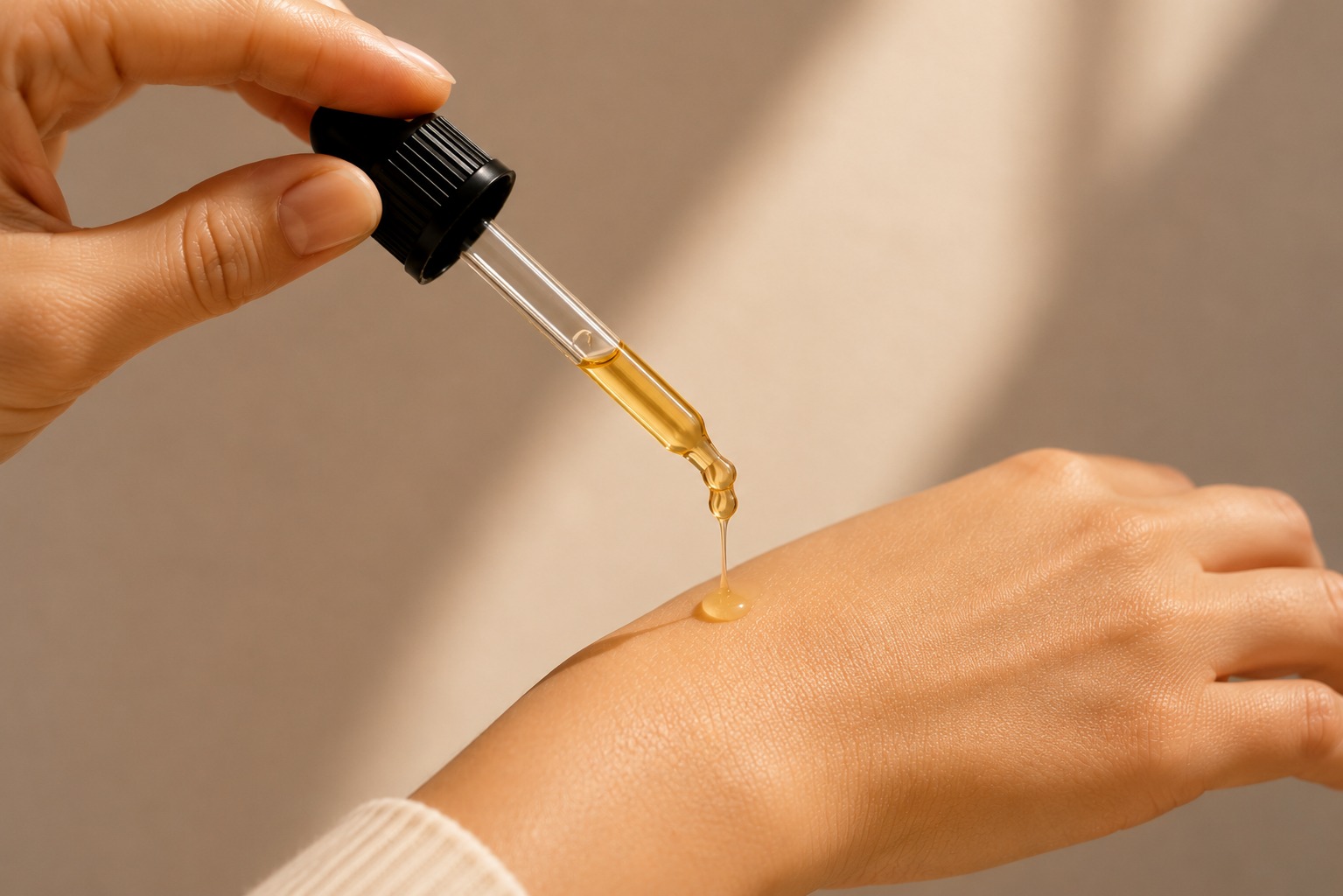
For skin that is easily irritated, reactive, or prone to dryness and tightness, jojoba offers something most botanical oils do not: compatibility without provocation. The wax ester structure means it does not occlude the skin heavily or interfere with the skin's own moisture regulation. It absorbs to leave a breathable, soft finish rather than a film, which is part of why sensitive skin tolerates it so well even at daily use.
It is also fragrance-free in its unrefined state. Most botanical oils carry some degree of natural scent; jojoba has almost none, which removes one of the most common triggers for reactive skin. There are no essential oils, no naturally occurring aromatic compounds, and nothing the skin needs to process before it can benefit from the emollient effect.
The result is a carrier oil that works across a wider range of skin types and conditions than most, genuinely comfortable for sensitive, dry, combination and even mildly oily skin, used morning or evening without any sense of overloading the skin.
How To Use It
The most straightforward use is as a facial oil: two or three drops warmed between clean palms and pressed gently into the face after cleansing, either alone or under moisturizer. It layers well under most formulations without pilling. It can also be used as a lightweight body oil on dry patches, smoothed through dry hair ends or worked into the scalp as part of a pre-wash treatment, pressed into dry cuticles before bed, or used as a slip layer for facial massage.
One practical note: because of its low triglyceride content, jojoba is one of the more shelf-stable carrier oils available. Unlike rosehip or sea buckthorn, which oxidize relatively quickly and need to be used within six months of opening, jojoba keeps well for considerably longer under normal storage conditions. A cool, dark location is still sensible, but the urgency around freshness that applies to polyunsaturated oils is much reduced here.
Why The Cliganic Version
Jojoba is a single-ingredient product by nature, but that does not mean all jojoba oils are the same. Heat extraction, refining, and solvent processing (hexane is commonly used in cheaper oils) all degrade the wax esters that make jojoba effective. What you want is cold-pressed, unrefined, hexane-free oil with no additives diluting the formula.
The Cliganic Organic Jojoba Oil ticks every one of those boxes. It is 100% pure single-ingredient jojoba, USDA Organic certified, cold-pressed, unrefined, hexane-free, Non-GMO Project Verified, vegan, and cruelty-free, bottled in the USA with third-party purity testing on each batch. For a single-ingredient oil, the credential list is about as thorough as it gets. Cliganic's botanical oil range has featured here before — the same philosophy that makes their rosehip oil one of the cleaner options in that category carries directly across to the jojoba.
One small note on appearance: cold-pressed unrefined jojoba has a naturally pale golden color and a very faint, fleeting scent when first applied. Both are normal for an unprocessed product; the scent disperses within seconds and does not linger.
Final Thoughts
The most enduring skincare ingredients tend to be the ones with genuinely interesting chemistry behind them, and jojoba oil sits comfortably in that group. Lightweight, stable, fragrance-free, structurally compatible with skin's own sebum, and versatile enough to replace several products in a bathroom cabinet. For dry and sensitive skin particularly, it is one of the more straightforward improvements a routine can make — a single ingredient, used consistently, that simply makes skin feel softer and more comfortable over time.
Sometimes that is all a product needs to do.