Written by The Botanical Glow
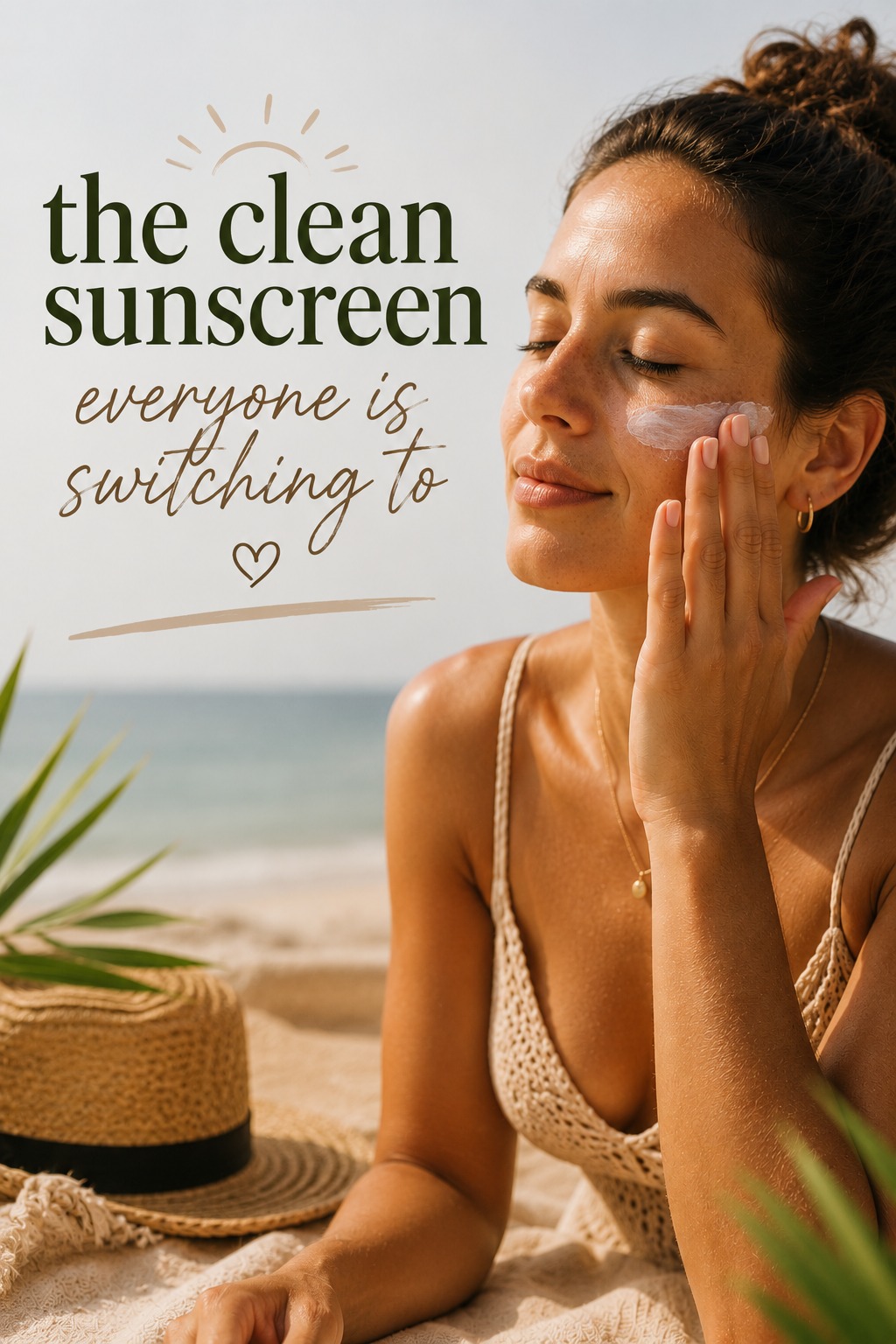
The Clean Mineral Sunscreen Everyone Is Switching To This Summer
Brand: Badger
This article contains affiliate links. As an Amazon Associate we earn from qualifying purchases — at no extra cost to you.
Shop on Amazon →Finding a sunscreen that actually feels clean and gentle on the skin is surprisingly difficult. Most mainstream SPF products still rely on chemical UV filters, synthetic fragrance and long ingredient lists that many clean beauty shoppers spend the rest of their routines actively trying to avoid. The result is that sunscreen — arguably the single most important step in any skincare routine — often ends up being the least "clean" product in the bathroom cabinet.
Mineral sunscreens have become the natural answer. They protect through physical UV filters rather than chemical ones, tend to be gentler on sensitive skin, and the best of them have ingredient lists short enough to fit on a label without a magnifying glass. One product in particular keeps coming up in clean beauty circles right now: the Badger Reef Safe Mineral Sunscreen SPF 40.
What Is Mineral Sunscreen?
Mineral sunscreens — sometimes called physical sunscreens — protect the skin using mineral UV filters, almost always zinc oxide or titanium dioxide. Rather than absorbing into the skin and converting UV energy chemically (as chemical sunscreens do), mineral filters sit on the surface of the skin and physically reflect or scatter UV rays away from it. Zinc oxide in particular is one of the few UV filters that provides genuine broad-spectrum protection against both UVA and UVB rays from a single active ingredient.
The appeal in the clean beauty world is partly about how mineral filters work and partly about what they let formulators leave out. A well-made mineral sunscreen can rely on just a few ingredients — the zinc oxide plus a clean carrier — instead of the long list of synthetic UV filters, stabilisers and fragrance compounds that mainstream chemical sunscreens tend to need.
Why People Are Switching To Mineral SPF
A few reasons are driving the shift. Mineral filters are generally well-tolerated by sensitive and reactive skin types, which is why mineral sunscreens are almost always the recommendation for children, anyone with rosacea, and people whose skin has reacted poorly to chemical sunscreens in the past. They also tend to be the preferred option for environmental reasons — some chemical UV filters (notably oxybenzone and octinoxate) have been implicated in coral reef bleaching, and have been banned outright in Hawaii, Mexico and several other tourist destinations.
And practically, the ingredient profile is simpler. If you have been building a clean skincare routine and have spent months reading the back of every label in your bathroom, the moment you flip a mineral sunscreen tube over and see four ingredients listed is genuinely satisfying.
How To Use It
The application matters more than people realise. Apply mineral sunscreen liberally — about a shot glass-worth for full body coverage, or roughly a teaspoon for the face and neck alone — 15 minutes before sun exposure, and rub it in thoroughly to minimise any white cast. Warming the product between your palms first makes it noticeably easier to spread, especially in cooler weather when the formula firms up slightly in the tube.
Reapplication is non-negotiable for any sunscreen, mineral or otherwise. Every two hours of sun exposure, and immediately after swimming, sweating heavily, or towel-drying. The "all-day protection from one application" idea is a myth across the entire sunscreen category, and the reapplication step is what separates effective sun protection from a false sense of security.
Choosing A Good Mineral Sunscreen
The mineral sunscreen market has become crowded, and not every product calling itself "reef-safe" or "clean" earns the claim. When shopping, look for:
- Zinc oxide as the active ingredient — ideally non-nano, which means the particles stay on the surface of the skin rather than absorbing into it.
- Free from oxybenzone and octinoxate — the two chemical UV filters most strongly associated with reef damage and the ones banned by Hawaii and Mexico's sunscreen laws.
- A verified reef-safe certification, not just a marketing claim — Protect Land + Sea Certification from Haereticus Environmental Laboratory is the genuinely meaningful one.
- A short, clean ingredient list — the carrier ingredients should be recognisable, with no synthetic fragrance, parabens or unnecessary fillers.
The mineral sunscreen I keep coming back to is the Badger Sport Mineral Sunscreen SPF 40 in the 2.9 fl oz tube — it ticks all four boxes more comprehensively than almost any competitor. The active ingredient is 22.5% uncoated non-nano zinc oxide, the formula is 98% organic with just four total ingredients (zinc oxide, organic sunflower oil, organic beeswax and sunflower-derived vitamin E), and it was the first sunscreen ever to achieve Protect Land + Sea Certification — fully compliant with both Hawaii's Reef Act 104 and Mexico's reef-safe sunscreen laws. The fact that it is made by a women-owned family business in New Hampshire using 100% solar power, and packaged in a 50% recycled tube, is the kind of considered detail that does not directly affect how it performs on your skin but does say something about how seriously the company takes the rest of it.
Two honest caveats worth knowing about before buying. First, like every zinc-based mineral sunscreen, this one can leave a slight white cast — most noticeable on darker skin tones, and one of the legitimate reasons mineral SPF doesn't suit everyone. Rubbing it in thoroughly helps, but it will never be invisible the way chemical sunscreens can be. Second, the formula contains beeswax, so it is not vegan if that matters for your routine.
Final Thoughts
Sunscreen is the single most important step in any skincare routine, and the one most worth getting right. The best one is the one you will actually apply every day — and Badger has built the kind of clean, carefully-formulated mineral SPF that earns that daily habit. Four ingredients, broad-spectrum mineral protection, the strongest reef-safe certification on the market, and a formulation gentle enough for sensitive skin and family-friendly enough to use on children.
The cleanest skincare routine in the world means very little if you skip the step that actually protects the skin you are trying to take care of.