Written by The Botanical Glow Updated
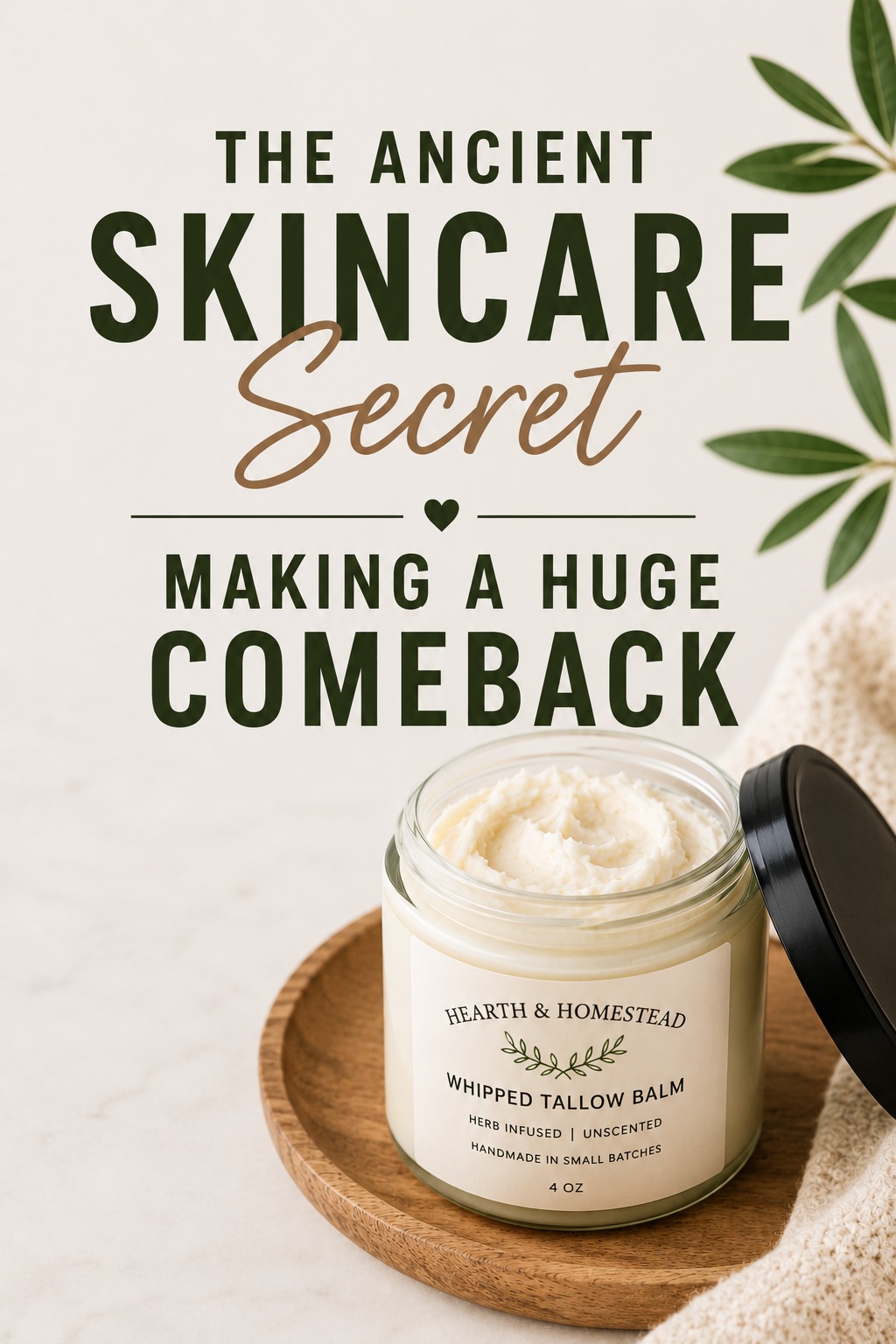
The Ancient Skincare Secret Making A Huge Comeback
Brand: Hearth & Homestead
This article contains affiliate links. As an Amazon Associate we earn from qualifying purchases — at no extra cost to you.
Shop on Amazon →If "tallow balm" has been showing up everywhere in your skincare feeds lately, you are not imagining it. After years of being dismissed as something from a great-grandmother's recipe book, tallow has quietly become one of the most talked-about ingredients in natural beauty — and the brands making it well are gathering serious followings online.
The product driving a lot of that attention is the Hearth & Homestead Whipped Tallow Balm, a hand-rendered, small-batch moisturiser built on a fundamentally simple idea: traditional ingredients, almost nothing else, made carefully. With over half a million jars sold to date, it has become something of a benchmark in the category.
What Is Tallow Balm?
Tallow is rendered beef fat — and despite how unexpected that sounds in a beauty cabinet, it has a much longer history in skincare than almost any modern moisturiser. Long before lotions and creams existed, traditional skincare relied on rendered animal fats because they were available, stable, and unusually compatible with human skin. Grass-fed tallow naturally contains vitamins A, D, E, K and B1, plus oleic and stearic fatty acids that closely mirror the lipids the skin produces itself. That biochemical similarity is the reason it tends to absorb so well and feel so nourishing.
The modern revival of tallow has happened largely in the wellness and clean beauty worlds, where the appeal is partly about ingredient minimalism and partly about getting away from the long, synthetic-heavy formulations that dominate mainstream moisturisers.
Benefits For Skin
Tallow balm is genuinely rich — more in the territory of a salve or balm than a typical face cream. It deeply nourishes dry skin, supports the skin barrier (those skin-mimicking fatty acids again), and provides a comforting layer of protection on patches that have been irritated by cold weather, wind or over-exfoliation. People love it for dry hands and cuticles, winter face routines, overnight moisture treatments, and as part of "slugging" routines where you seal in your skincare with a heavier occlusive at the end of the night.
It is particularly well-suited to dry, sensitive, eczema-prone or rosacea-prone skin types, who often find conventional fragranced moisturisers too irritating. That said, the richness is a real consideration — if you have oily or acne-prone skin, tallow balm may feel too heavy, and a lighter clean beauty moisturiser is probably the better starting point.
How To Use It
The application is refreshingly simple. Warm a pea-sized amount between your fingertips until the whipped texture melts, then press it gently into clean skin wherever it is needed. A little goes a remarkably long way — a single jar can last several months even with daily use.
It works as a full-face overnight moisturiser, as a targeted balm for particularly dry patches, or as the final occlusive step in a longer skincare routine. The unscented herb-infused version is the most versatile, and the texture softens further with body heat so it spreads further than it looks like it should.
Choosing A Good Tallow Balm
Tallow skincare is having a moment, and not every product currently riding the trend is well-made. When shopping, a few specifics make a real difference:
- 100% grass-fed and finished tallow — grain-finished or feedlot tallow has a less favourable fatty acid profile and may carry traces of feed-related residues.
- Slow, low-heat rendering — preserves the fat-soluble vitamins that high-heat industrial rendering tends to destroy.
- Minimal supporting ingredients — ideally just the tallow plus a simple carrier oil and optional botanicals, with no synthetic fragrance, parabens or fillers.
- Small-batch, handmade production — much more reliable for quality control and freshness than mass-produced equivalents.
The tallow balm I keep coming back to is the Hearth & Homestead Whipped Tallow Balm in the unscented herb-infused jar — it ticks all four boxes. The tallow is 100% grass-fed and finished, sourced from small regenerative farms in Virginia including Polyface Farm, hand-rendered using a low-heat dry process that preserves the natural vitamin content, and whipped to a light, fast-absorbing texture with organic olive oil infused with calendula and rose. The small-batch, hand-processed approach is what genuinely separates it from the wave of mass-market tallow products that have appeared in the last year — and the half-million-jars-sold track record is a useful signal that the formula is doing what it claims to.
One worthwhile caveat: the calendula and rose infusion means anyone with sensitivities to either should patch-test before applying widely, and the product is not vegan if that matters for your routine.
Final Thoughts
What looks like a new beauty trend is really a return to something much older — and good enough that it deserves the comeback. Tallow balm sits at an interesting intersection of clean beauty, ingredient minimalism and ancestral skincare, and the Hearth & Homestead version is one of the most carefully made examples currently on the market.
If you have been curious about tallow, this is a good place to start. And if you have been looking for a deeply nourishing moisturiser made with almost nothing in it, you may have just found the answer to a question conventional skincare has been failing to solve for a long time.